Wednesday, January 9, 2013
Art Therapy and Being Authentic
How do we know when we are being authentic? We are authentic when we are acting in a way that feels truthful. I know that I am not being authentic when I pretend to be indifferent when I am not. I also can catch myself being inauthentic when I present myself as more or less than I am. When I don’t respect my emotions and I laugh when I need to cry or when I fake beliefs to be accepted, something inside me realizes that I am not being authentic. I know that I am not being authentic when I fake emotions to please others. When checking in with ourselves to see if we are being authentic, here are some basic questions to consider:
1) Am I honest with others about my feelings in contexts where talking about feelings is appropriate?
2) Do I consciously strive to be truthful in communications?
3) Do I talk openly, and straightforwardly about that which I love and enjoy?
4) If I am honest about saying that I feel hurt, angry, or upset?
5) Do I stick up for myself and honour my needs and interests?
An Art Therapy Exercise For Being Authentic
Have some art supplies in front of you. Feel your feet on the ground and just sense into them. What do you notice? Take a deep breathe into your stomach, what do you sense there? Bring your attention to your hands. Bring your awareness to your head and notice how it is feeling. Now, gently turn your attention inward. Think of a time when you were not authentic maybe to accommodate someone else’s believes or feeling. Notice, where in your body you sense this memory. Is there an emotional quality to this sensation? Ask this part of you to speak. Without judgment, just staying Present for yourself ask this part of you if there is anything that it is wanting. Gently bring this self-Focusing session to a close. Now reflect on a symbol or image that comes to mind when you think of the word authentic. Draw your personal symbol.
Wednesday, January 2, 2013
Why Do We Re-enact Traumas?
![]() |
| Client painting in the Art Therapy Studio. |
In my 30s I decided that I was never going to be in a
relationship with a female friend again where I felt I was taken advantage of.
I was tired of being the giver and not the receiver in relationship. I wanted
to be in relationships where the flow of energy, respect and care was equality
shared. So, in the process of trying to heal this, I worked hard to understand and
identify why I attracted women to me that ended up taking advantage of my
generosity and kindness. Then, as I entered what I thought was a new healthy relationship
with an exciting fellow artist, I slowly realized that I was in one of the
least healthiest relationships of my life. I couldn’t understand why I kept
drawing the same type of woman into my life. I thought I had healed this and
now I could move on. But, what I didn’t know was that my body was doing exactly
what I wanted, clearing the pattern so I could move on. It was showing what
needed to be healed.
Pierre Janet was the first psychiatrist to identify the need
and compulsion to repeat traumas. The human brain is hard wired to master
overwhelming experiences and we are consciously or unconsciously compelled to
re-enact traumatic experiences. In this brilliant way, the body seeks the
healing it requires. However, if we do not enter the event consciously aware
and awake, it is difficult to do the enactment differently thus changing the
ending from being traumatic to healing. The changes we are seeking usually take
a creative and strong action from us to reverse things. The wonderful thing
about this is witnessing our body’s drive to move forward in a healthy healing
way. The awful thing about this is if we haven’t worked on the trauma, and if
we aren’t aware and awake about what we are doing and why we are doing it, we
will repeat the trauma causing more pain and suffering. When we find ourselves
in the same situation that we felt we had conquered years ago or when we find
ourselves repeating the same mistakes, instead of getting frustrated we should celebrate
the wisdom of our bodies to know that we need to repeat this event in order to
clear it from our lives. We need to trust that things show up because our
neuro-somatic programing is trying to free or clear us of being stuck by a
trauma in ways that we aren’t aware of. Changing consciousness is a complex
process that may take several tries.
This year, 2013, I want change, but I also want to welcome
my re-enactment as gifts from my body in order to clear the way for real change
to happen. I hope I feel the same when I find myself in a frustrating
re-enactment of a situation.
Monday, December 17, 2012
Art Therapy and Sensory Processing Disorder or SPD
![]() |
| Water gels to help children feel calm. |
When children or adults have problems processing visual,
auditory, tactile, olfactive, gustatory, vestibular, and proprioceptive
information from the environment around them, they may have a sensory processing
disorder. This is a neurological disorder causing difficulties with taking in,
processing, and responding to sensory information. Many of the people that I
work with, have some difficulty with processing sensory information. At some
time most of us have experienced sensory overload; perhaps while shopping in
malls, driving in traffic or attending a concert.
Sensory over responsively can cause a person to go into a
fight or flight reaction. Certain sounds (a school bell, someone yelling),
scents (perfume, hair shampoo), or sights (flashing lights, fluorescent
lights), and or feels (tags on clothing, chalk) may cause a child to run away
or scream in fright. One client I work with spends to first 5 minutes checking
out everything in the art rooms to make sure that he knows what is new, what
others are doing and make sure that he is not missing anything. I always play
the same soothing music, burn lavender oil and talk and walk slowly when he is
here to help calm down his autonomic nervous system and help regulate his
sensory input to a more manageable level. After about 5 minutes, he can settle
into a focused and productive session.
![]() |
| Blue lights for calming. |
Sensory seeking means that people in this range seek intense
and extreme sensory input. They may not feel pain and they may make sounds with
their mouths as a way to stimulate their auditory systems. They often play
rough and have poor impulse control. I have a client who would throw and
spatter paint for half an hour onto a 2 metre long sheet of paper hanging on
the wall before he could settle into his body and relax. Now he happily plays
in the sand trays as we process his experiences.
![]() |
| Sand tray |
The sensory work that I do in my therapy room is geared to
help normalize the senses. Children with dyspraxia have a low awareness of
their body in space and lack an ability to feel or sense where their body begins
and ends. I use many different body awareness techniques to help children relocate
themselves in their body. Poor muscle control, poor balance are often also
experienced by children and adults who have sensory issues.
So, how can art therapy help? First, by creating an
atmosphere that is sensory friendly. I have low lights, coloured lights, soft
music, aromatherapy, calm wall spaces and a slowed down environment that has
limited stimulation so children and adults have less sensory input to deal with
when they enter the therapy space. I use biofeedback, EMDR, breathing
exercises, a children’s meditation program and other processes that help
children and adults tolerate being in their body at a slowed down speed. I have
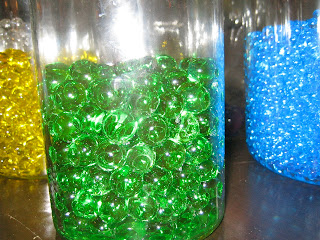
water gels to help calm the senses. Sand tray work is wonderful for helping
children learn to tolerate and enjoy different textures and feels. Playing in
sand is one way children can practice sensory integration. Sensory integration
is the neurological process that helps us interact with our environment through
using our senses. The brain needs to be able to process multiple sensory inputs.
Sensory integration is
necessary for almost every activity that we perform because the combination of
multiple sensory inputs is essential for us to comprehend our surroundings.
![]() |
| Water gels. |
Sunday, December 9, 2012
Guardian Angels
Denise Litchfield is the
author of the extraordinary blog, Grrl And dog. She creates wonderful guardian
angels. I recently ordered one for my granddaughter Aurora to live alongside
her in her bedroom. Who doesn’t need a guardian angel?
In traditional belief, guardian
angels were thought to be assigned to protect and guide a particular person, or
group of people. Belief in guardian angels can be traced throughout all
antiquity. I think we all can say that at one time or another we have felt the
presence of a guardian angel in our lives. In a complex chaotic world, it is a
comforting thought that someone in the spirit realm is watching over us. This
dear little one that Denise designed and sewed has that job in Aurora’s room. Because
she is soft and cuddly, this little angel is meant to be chewed on, but I don’t
think that will reduce her guardian powers.
Monday, December 3, 2012
Art Therapy and God's Eyes
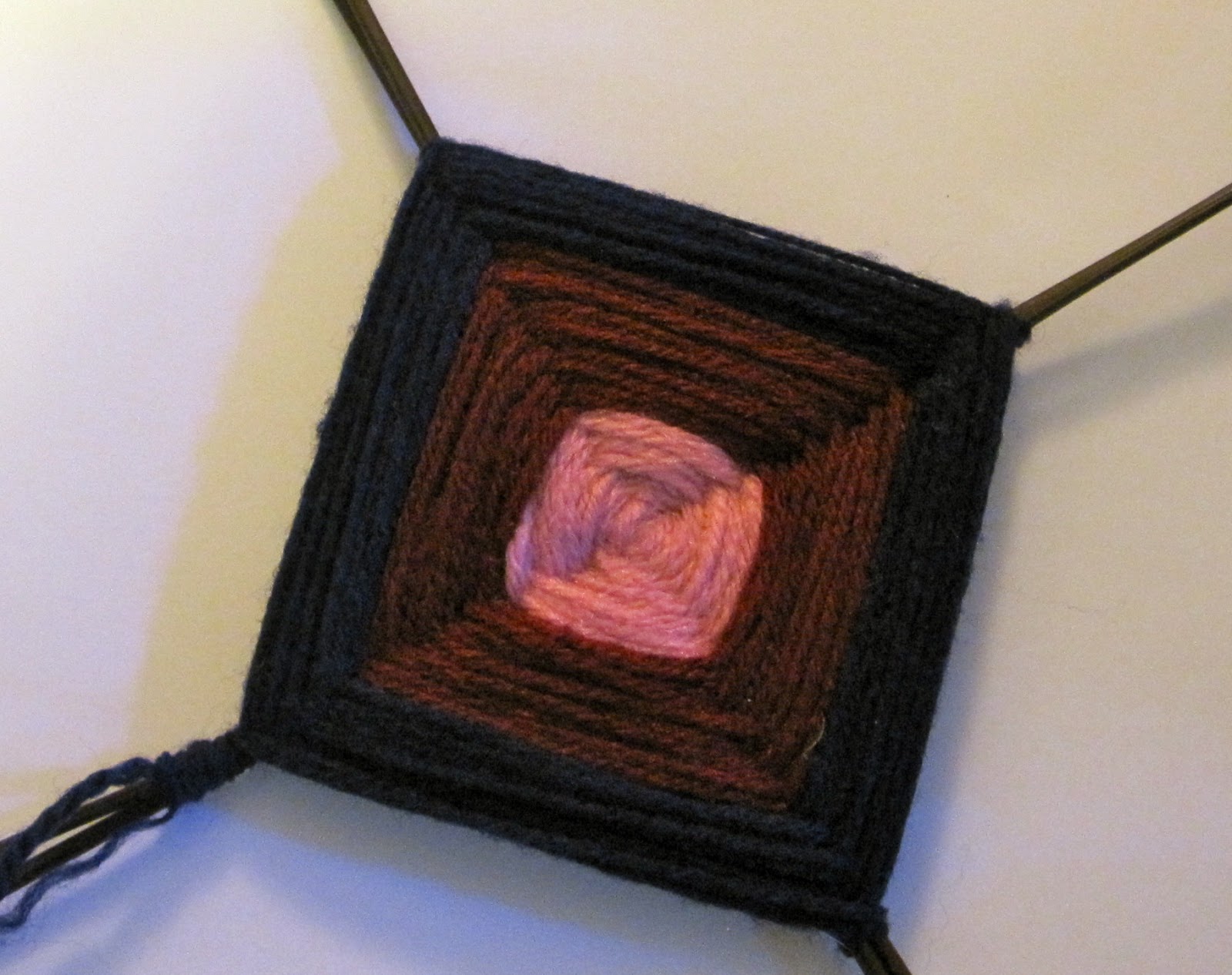
God’s Eyes come from the Huichol people of
western Mexico. It is a spiritual object that brings protection to babies. The
yarn weaving starts with the central eye woven by the father and then one eye
is added for every year of the child’s life until the child reaches five. The
four points represent the elemental processes of earth, fire, air and water.
In my Art therapy studio we made a similar
weaving, but we embed the weaving with a different meaning. The children wove
the central eye in a colour to represent themselves. Then they picked two or
three other colours to represent people in their lives that protect and love
them.
They enjoyed doing this activity and most
of the children said that they wanted to hang them over their beds.
Subscribe to:
Posts (Atom)